Did You Know?
When it comes to job hunting, the competition is fierce. Studies show that each corporate job offer attracts 250 resumes on average. Of those candidates, 5 will get called for an interview, and only 1 will get the job.
When it comes to job hunting, the competition is fierce. Studies show that each corporate job offer attracts 250 resumes on average. Of those candidates, 5 will get called for an interview, and only 1 will get the job.
.svg)

That’s a lot of people all going after the same job you are. They all probably have a work history similar to yours, and some may even have more experience than you do.
So, what sets you apart?
Job Experience
Cultural Fit
Prestige of College
GPA
It’s no surprise that job experience is the top thing recruiters look for on a resume, but there’s a reason cultural fit is a close second. Employers want to hire individuals who are the whole package. They don’t want to hire someone who’s just good at their job. They want to hire someone who shows initiative and confidence. They want to hire someone they can get along with who will also build relationships within their organization.
There are several qualities that are appealing to employers, but the #1 trait employers absolutely love is confidence.
When a candidate projects confidence, employers know that they:
Confidence comes from the knowledge that you can handle whatever comes your way. A
confident candidate gives the impression they came prepared and are ready to interview.
.svg)
Candidates who possess confidence are more likely to take action because they believe in
themselves and their ideas.
.svg)
Independent thinkers tend to be more assertive and more willing to think outside of the box
— two very attractive qualities within the corporate world.

Confidence is a trait that attracts others. People with confidence tend to build long-lasting
relationships, make friends easily and promote a healthy and happy environment.

Confidence is an important quality to have when managing and leading other people. The fact that you believe in yourself will, in turn, inspire others to believe in you.
Conversely, when a candidate lacks confidence, interviewers will get the impression that they:
.svg)
A lack of confidence can make candidates seem timid and anxious during an interview which
can give the impression that they aren’t happy and excited to be there.

If you can’t perform well during an interview, how will you handle the daily stress of the job
which may include tight deadlines and time-management constraints?
.svg)
Interviewers want to hire someone who’s a good fit. Nobody wants to hire someone who
can’t get along with their coworkers.
People who lack confidence often come across as timid and uncertain in their answers. This
can lead to giving the impression that they came unprepared.

STEP 1
How do you become confident?
Well, the Bureau of Labor says that preparation can be as important as the interview itself, and our team at My Interview Practice strongly agrees.
That’s right, the #1 way to enter an interview confidently is to prepare!
The My Interview Training Program is the perfect solution to ensure you’re prepared. The program will help you understand what employers look for in a perfect candidate and how you can land your dream job.
Here’s how our curriculum is structured:
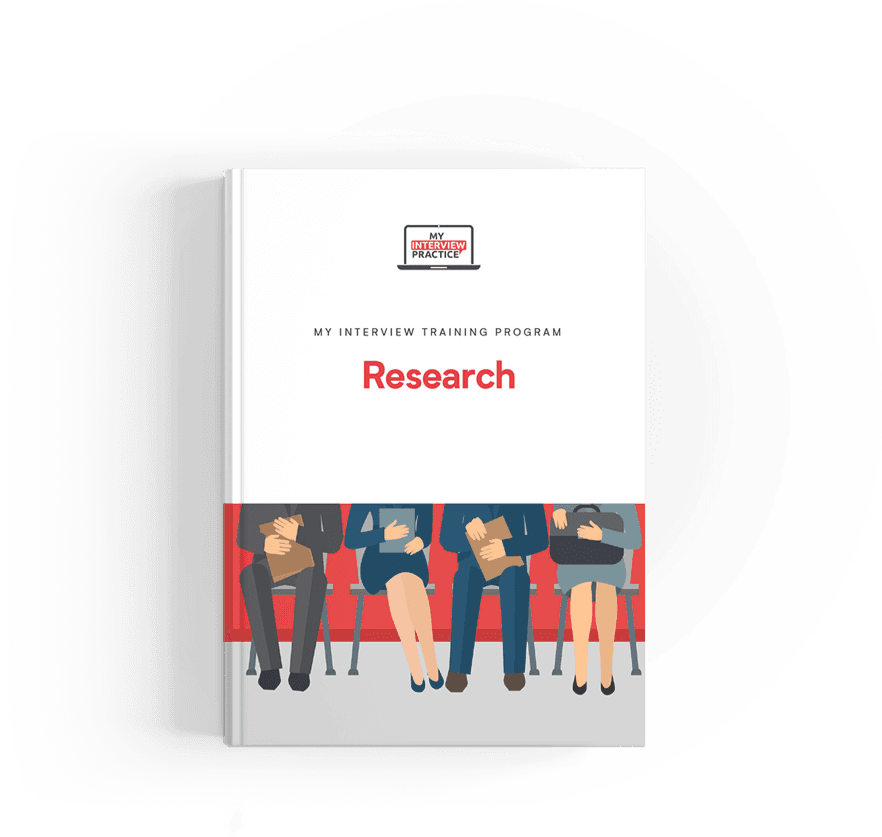
Learn what to research about a company, why it’s important, and how to use that information to gain an edge over the competition. Doing your due diligence before an interview is an essential part of the interview process.
This guide will explore vital research topics such as:
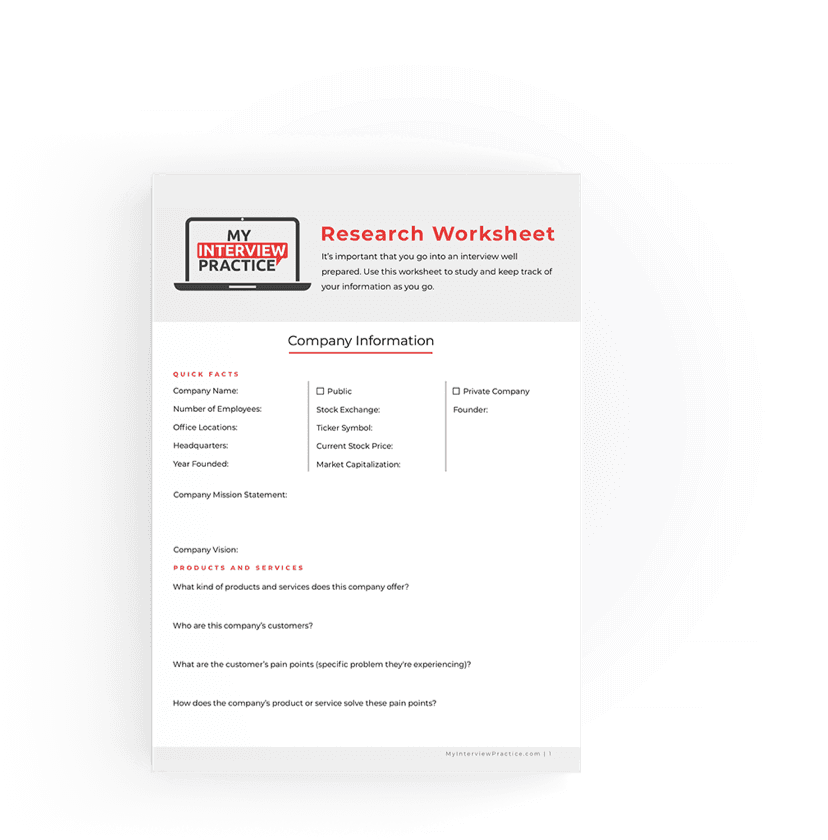
Keep track of your research with our step-by step worksheet that helps you capture important company information as you go.
This worksheet will help you:
Determine how to accurately assess your strengths and weaknesses and use them to your advantage during an interview. Everyone has a skill that separates them from everyone else. Everyone also has weaknesses that differ from others, and that’s okay.
This guide will teach you how to:
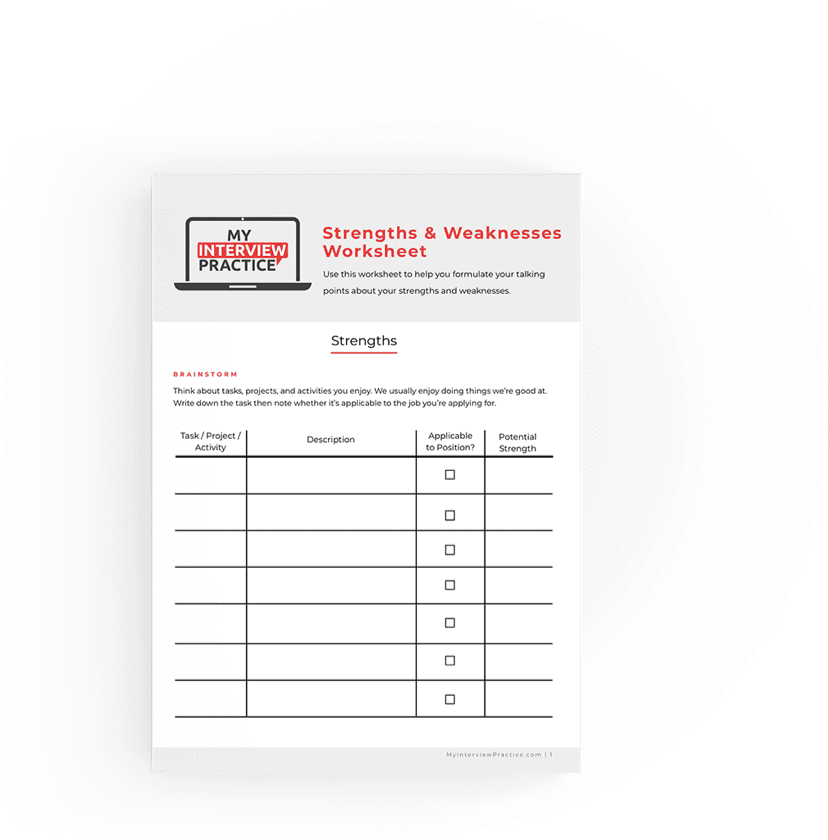
Don’t know what your top strengths and weaknesses are? This worksheet will help you identify them and then formulate your talking points.
It will help you methodically:
Understand why interviewers ask behavioral and situational questions, and then learn how to use the S.T.A.R. technique to blow them out of the water! Interviewers love asking behavioral and situational questions. These types of questions focus on your past experiences to determine future behavior.
This section will help you:
Technical questions are an important part of the interview process. Interviewers use them to find out if you have the technical qualifications needed for the job. Understand how to best answer these questions.
This section will help you:
The questions you ask are almost as important as the answers you give in an interview. Determine which questions to ask and why they’re important.
This section will help you understand:
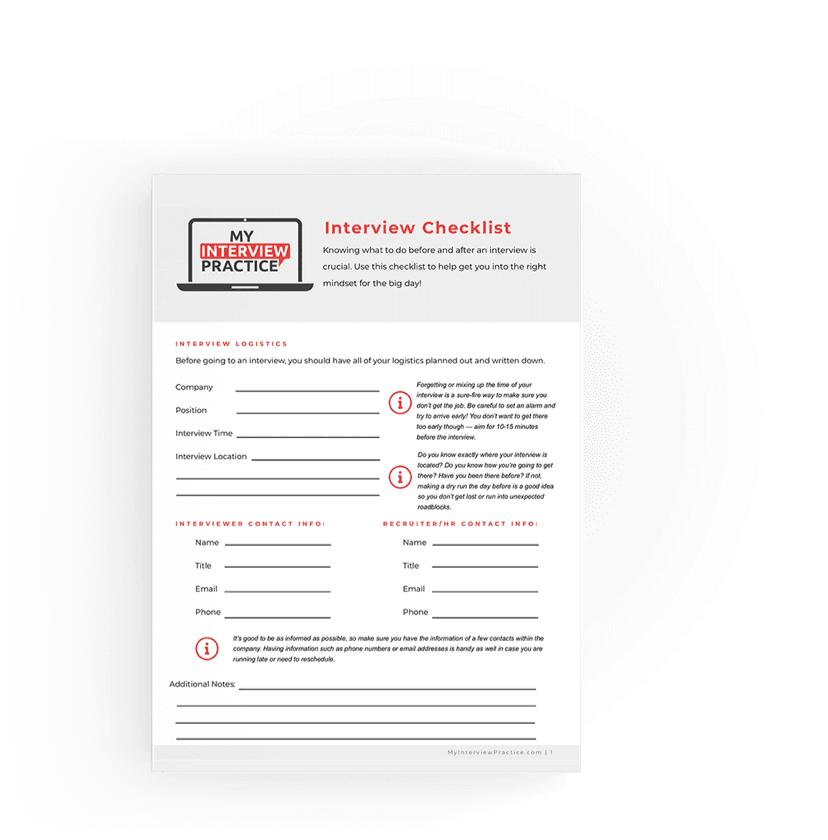
Knowing what to do before and after an interview is crucial. Use this helpful checklist to help get you into the right mindset for the big day!
This worksheet will teach you:

Remember, succeeding in an interview is a two-step process:
Company Research - Understand the company, who they want to hire, and why.
In this guide, we’ll examine topics such as: